
Climate and energy
Advancing renewable power, electrification and better carbon data so we can reduce emissions across business units with clearer accountability.

Ashcourt Group Sustainability
We are continuing to invest in practical improvements across our fleet, materials, energy and recycling operations, with a focus on reducing environmental impact and supporting customers with more sustainable construction options.
Our sustainability approach
Sustainability sits at the heart of our decision-making, from how materials are recovered and processed to how vehicles are routed, powered and used. Our focus is on improvements that work in day-to-day construction: lower-carbon materials, better logistics, renewable energy and higher recovery of waste streams.
Advancing renewable power, electrification and better carbon data so we can reduce emissions across business units with clearer accountability.
Maximising waste recovery, recycled aggregate output and sustainable material choices without compromising performance or quality.
Managing environmental impacts carefully across the communities and sites where we operate, with a focus on responsible stewardship.
Keeping more work within our own fleet and systems so we can improve utilisation, reduce empty backhauls and maintain high operating standards.
Sustainable solutions in action
These initiatives are already shaping how we support projects across Hull, East Yorkshire, Lincolnshire and the North East, giving customers access to more sustainable options for aggregates, waste management, haulage and site support.

Our wash plants are installed throughout key locations and can produce 120 tonnes of recycled products per hour, including washed sharp sand, washed soft sand, 10mm pipe bedding, 20mm pipe bedding and 40-80mm clean.
Soil and rubble collected by our tipper fleet can be washed, screened and returned as useful construction products, diverting waste away from landfill and helping customers use cost-effective recycled materials.

Our fully electric Volvo FH trucks can travel up to 300km as they service aggregate orders across Yorkshire and Lincolnshire, with charging times of approximately 2 hours on DC or 9 hours on AC.
We have also invested in Renault Trucks E-Tech D Wide skip loaders. These 18-tonne vehicles are designed to complete a full day of work on a single charge with zero tailpipe emissions and lower traffic noise.

The installation of our 1MW EWT wind turbine is designed to provide long-term renewable power for the Foster Street depot, supporting offices, the workshop, the concrete plant and future charging demand.
Reaching 77 metres, the turbine has been selected for the site conditions to deliver strong energy performance with low noise levels and low ownership costs.
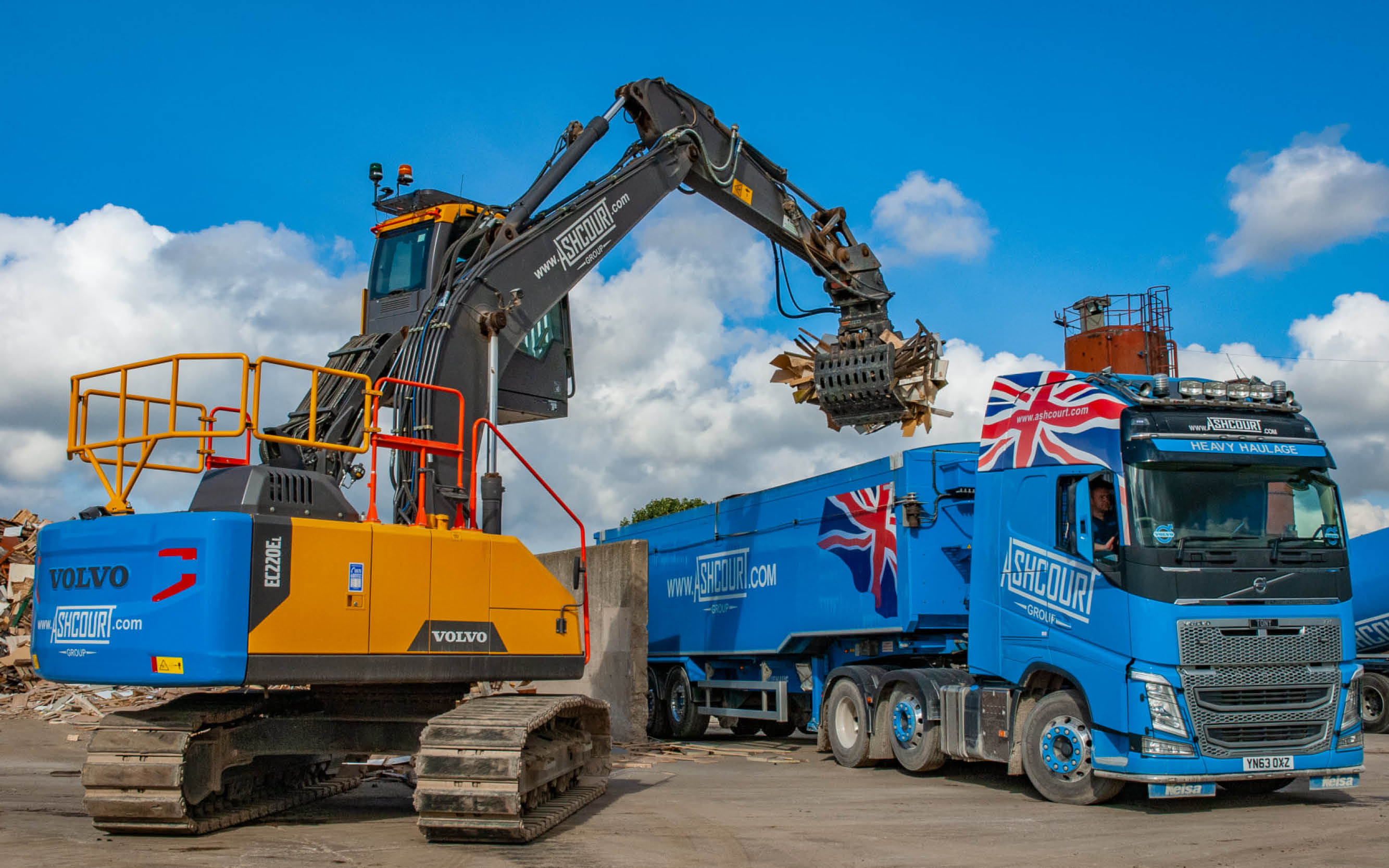
At our dedicated waste recycling facility, materials taken in from skips, grab wagons and tippers are sorted, processed and recycled into useful outputs.
Wood products can be turned into biomass fuel for office heating, soil is screened into a reusable topsoil product and rubble is processed into saleable recycled aggregate.

Our Pocklington HQ and Vehicle Maintenance Unit has been equipped with 410 DMEGC 415-watt panels, giving a total installed capacity of 170,150 watts to power the full building.

The Kleemann 120 Pro crusher features an E-Drive diesel-electric drive concept, with electric working drives used across the machine except for transmission and auxiliary functions.
Across our wider mobile processing fleet, this approach supports lower fuel consumption and reduced operational emissions compared with conventional diesel equivalents.
Operational control
We operate our own fleet wherever possible, helping us maximise vehicle capacity, avoid empty backhauls and maintain control over service quality. Investments in transport and operational systems help streamline routing, vehicle tracking, driver hours, automation and material movements.
Keeping more journeys within Ashcourt control helps improve utilisation and gives customers a more consistent collection and delivery service. Keeping a new fleet enables us to have the most fuel efficient fleet possible.
We reduce the carbon footprint of concrete by lowering cement content and replacing a portion with lower-carbon materials such as Granulated Blast Furnace Slag.
We are improving carbon data quality, scope consistency and external verifiability as our reporting matures across Scope 1, 2 and 3 emissions.
Looking ahead
Our next areas of focus include the parts of the business where Ashcourt has strong operational control: construction and demolition waste recovery, renewable energy, electrified fleet and equipment, rail freight and more robust carbon accounting.

We aim to set the standard in the construction industry and continue to explore practical sustainable solutions where they deliver measurable benefits for our business, our customers and the communities we work in.
Explore sustainability initiatives